

Class Pages
Foundation Stage (Nursery & Reception)

The Early Years Foundation Stage consists of one nursery class and two reception classes. Our teachers are Miss Diriye (Nursery) Miss Chani and Mr Bowles. Our support staff are Ms Morgan, Mrs Kasia, Mrs Ferla, Ms Braga, Miss Jeronimo.
In Early Years we provide a stimulating and rich learning environment. This is supported with a highly experienced teaching team that allows the children to gain a sense of self, exploration, play with peers, and build confidence whilst learning. We encourage independence and actively support children in their own decisions. We follow the Foundation Stage Curriculum for all of our areas of learning. Please ask one of us if you require more information.
Our topics this year are My Feelings, Colour and Light, People Who Help Us, Traditional Tales, Growing and Minibeasts. Please do look at our Topic Maps to see how you can support your child at home.
For RE, we follow the ‘Come and See’ programme, which is an introduction to the Catholic Faith. Our Mission Statement is promoted heavily and permeates our school day and is embedded with us following the Liturgical Calendar. Bible Stories are the starting point for many of our RE sessions. We maintain strong links with Our Lady’s Church in St John’s Wood.
Please look out for the weekly blog which will be posted every Friday on our website under 'Newsletters'. This will talk about what we have covered during the week as well as other important notices.
We hope that this page will help you to feel part of our learning journey and we look forward to working with you and your family.
- Nursery Booklet 2024
- Parents Guide - What to Expect, When?
- Starting School for the First Time
- Early Years Curriculum Framework
- Starting Reception
Useful Websites
- EYFS Parents Guide
- Jolly Phonics Information
- Tricky Words - Jolly Phonics
- Tricky Words Checklist Jolly Phonics
- Maths Games
- Number Formation Rhyme Card
Early Years Foundation Stage Curriculum
There are seven areas of learning and development which are explored during Nursery and Reception. All areas of learning and development are important and inter-connected.
1. Communication and Language
The development of children’s spoken language underpins all seven areas of learning and development. Children’s back-and-forth interactions from an early age form the foundations for language and cognitive development. The number and quality of the conversations they have with adults and peers throughout the day in a language-rich environment is crucial. By commenting on what children are interested in or doing, and echoing back what they say with new vocabulary added, practitioners will build children's language effectively. Reading frequently to children, and engaging them actively in stories, non-fiction, rhymes and poems, and then providing them with extensive opportunities to use and embed new words in a range of contexts, will give children the opportunity to thrive. Through conversation, story-telling and role play, where children share their ideas with support and modelling from their teacher, and sensitive questioning that invites them to elaborate, children become comfortable using a rich range of vocabulary and language structures.
2. Personal, Social and Emotional Development
Children’s personal, social and emotional development (PSED) is crucial for children to lead healthy and happy lives, and is fundamental to their cognitive development. Underpinning their personal development are the important attachments that shape their social world. Strong, warm and supportive relationships with adults enable children to learn how to understand their own feelings and those of others. Children should be supported to manage emotions, develop a positive sense of self, set themselves simple goals, have confidence in their own abilities, to persist and wait for what they want and direct attention as necessary. Through adult modelling and guidance, they will learn how to look after their bodies, including healthy eating, and manage personal needs independently. Through supported interaction with other children, they learn how to make good friendships, co-operate and resolve conflicts peaceably. These attributes will provide a secure platform from which children can achieve at school and in later life
3. Physical Development
Physical activity is vital in children’s all-round development, enabling them to pursue happy, healthy and active lives. Gross and fine motor experiences develop incrementally throughout early childhood, starting with sensory explorations and the development of a child’s strength, co-ordination and positional awareness through tummy time, crawling and play movement with both objects and adults. By creating games and providing opportunities for play both indoors and outdoors, adults can support children to develop their core strength, stability, balance, spatial awareness, co-ordination and agility. Gross motor skills provide the foundation for developing healthy bodies and social and emotional well-being. Fine motor control and precision helps with hand-eye co-ordination, which is later linked to early literacy. Repeated and varied opportunities to explore and play with small world activities, puzzles, arts and crafts and the practice of using small tools, with feedback and support from adults, allow children to develop proficiency, control and confidence.
4. Literacy
It is crucial for children to develop a life-long love of reading. Reading consists of two dimensions: language comprehension and word reading. Language comprehension (necessary for both reading and writing) starts from birth. It only develops when adults talk with children about the world around them and the books (stories and non-fiction) they read with them, and enjoy rhymes, poems and songs together. Skilled word reading, taught later, involves both the speedy working out of the pronunciation of unfamiliar printed words (decoding) and the speedy recognition of familiar printed words. Writing involves transcription (spelling and handwriting) and composition (articulating ideas and structuring them in speech, before writing)
5. Mathematics
Developing a strong grounding in number is essential so that all children develop the necessary building blocks to excel mathematically. Children should be able to count confidently, develop a deep understanding of the numbers to 10, the relationships between them and the patterns within those numbers. By providing frequent and varied opportunities to build and apply this understanding - such as using manipulatives, including small pebbles and tens frames for organising counting - children will develop a secure base of knowledge and vocabulary from which mastery of mathematics is built. In addition, it is important that the curriculum includes rich opportunities for children to develop their spatial reasoning skills across all areas of mathematics including shape, space and measures. It is important that children develop positive attitudes and interests in mathematics, look for patterns and relationships, spot connections, ‘have a go’, talk to adults and peers about what they notice and not be afraid to make mistakes.
6. Understanding the World
Understanding the world involves guiding children to make sense of their physical world and their community. The frequency and range of children’s personal experiences increases their knowledge and sense of the world around them – from visiting parks, libraries and museums to meeting important members of society such as police officers, nurses and firefighters. In addition, listening to a broad selection of stories, non-fiction, rhymes and poems will foster their understanding of our culturally, socially, technologically and ecologically diverse world. As well as building important knowledge, this extends their familiarity with words that support understanding across domains. Enriching and widening children’s vocabulary will support later reading comprehension.
7. Expressive Arts and Design
The development of children’s artistic and cultural awareness supports their imagination and creativity. It is important that children have regular opportunities to engage with the arts, enabling them to explore and play with a wide range of media and materials. The quality and variety of what children see, hear and participate in is crucial for developing their understanding, self-expression, vocabulary and ability to communicate through the arts. The frequency, repetition and depth of their experiences are fundamental to their progress in interpreting and appreciating what they hear, respond to and observe.
Pink Classes (Y1 & Y2)

Year 1 and 2 are the Pink Classes.
Pink 1’s (Year 1) Class Teacher is Miss Wegrzynowicz, Pink 2’s Class Teacher (Year 1 and 2) is Miss Jackson and Mr Starbuck and Pink 3's (Year 2) teacher is Miss S. Ward. Pink classes are supported by Mrs Gharib, Miss Nott, Miss Crossey and Miss Morgan.
In the Pink classes, we will embark on an exciting adventure to learn about all the wonderful things we would find at the Coast, and in History, we will explore how schools are different from the past. We will also be learning about the Monarchy, and what it means to live a royal life.
As we go through the academic year, you will be able to find more information about what we are learning through our yearly creative curriculum map. This year, there will be many cross-curricular and active learning opportunities that will take place in the children’s day to day learning.
At St. Joseph’s, in RE, we follow the ‘Come and See’ Catholic programme. This programme supports the children’s knowledge and understanding of the Catholic faith. In the Autumn Term, we will be studying the following units of work: Beginnings, looking at God’s marvellous creations, then moving on to Signs and Symbols, where we will explore the importance of our Baptism, and then, Preparations, where we will begin to prepare our hearts for the birth of Jesus Christ.
As the school year continues, we will be attending our local Forest School trips and hope to go on other exciting trips to support the children’s learning.
- Pink 1 Timetable - 2025
- Pink 2 Timetable - 2025
- Pink 3 Timetable - 2025
- Pink 1 Curriculum Meeting Presentation 2023
- Pink 2 Curriculum Meeting Presentation 2023
- Pink 3 Curriculum Meeting Presentation 2023
- Year 1 Curriculum Plan - 2025
Key Stage 1 Curriculum
Art Aims
The National Curriculum for art and design aims to ensure that all pupils:
- produce creative work, exploring their ideas and recording their experiences
- become proficient in using drawing, painting, sculpture and other creative expressions
- evaluate and analyse artistic works using the language of art, craft and design
- know about the great artists, craftsmen and designers, and understand the historical development of their art forms.
Subject Content Key Stage 1
Pupils should be taught creativity in art, craft and design by:
- using a range of materials to design and make products
- using drawing, painting and sculpture to share their ideas, experiences and imagination
- developing techniques in using colour, pattern, texture, line, shape, form and space using clay and printing to a large scale and in 3D
- being taught about the work of a range of artists, craftsmen and designers, describing the
- differences and similarities between different practices and disciplines, and making links to their own work.
Computing Aims
The National Curriculum for computing aims to ensure that all pupils:
- can understand and apply the fundamental principles of computer science, including logic, algorithms, data representation, and communication
- can analyse problems in computational terms, and have repeated practical experience of writing computer programs in order to solve such problems
- can evaluate and apply information technology, including new or unfamiliar technologies, analytically to solve problems
- are responsible, competent, confident and creative users of information and communication technology.
Subject Content Key Stage 1
Pupils should be taught to:
- understand what algorithms are, how they are implemented as programs on digital devices, and that programs execute by following a sequence of instructions
- write and test simple programs
- use logical reasoning to predict the behaviour of simple programs
- organise, store, manipulate and retrieve data in a range of digital formats
- communicate safely and respectfully online, keeping personal information private, and recognise common uses of information technology beyond school.
Design and Technology Aims
The National Curriculum for design and technology aims to ensure that all pupils:
- understand food and nutrition and have opportunities to learn to cook.
- In meeting this aim schools without access to a teaching kitchen, nearby kitchen or mobile kitchen may have to adapt what they teach accordingly to the facilities available. It also aims to ensure that, working in fields such as materials (including textiles), horticulture, electricals and electronics, construction, and mechanics, they:
- develop valuable practical skills and use these safely with a range of resistant and non- resistant materials, drawing media, tools and equipment, in both 2-D and 3-D
- design and make well-crafted products that are fit for purpose
- develop and use a range of common practical skills, in contexts such as mechanical diagnostic and repair tasks
- understand and, where appropriate, use the design cycle of planning, developing prototypes, modifying, making and evaluating
- know about good design, everyday products and use correct technical terminology
- investigate the rich history of design and technological innovation in Britain and further afield, from the Industrial Revolution onwards, as well as current innovations.
Subject Content Key Stage 1
Pupils should explore and develop purposeful, practical skills in design and technology, taking advantage of local opportunities and the expertise of teachers. Pupils should be taught the basic principles of balanced eating and where food comes from, and should be encouraged to develop an interest in cooking. Through working in fields selected from those listed in the introduction (materials (including textiles), horticulture, electricals and electronics, construction, and mechanics), pupils should be taught to:
- perform simple, useful, practical tasks (for instance, making products for a purpose using a basic range of tools and materials, and techniques such as cutting, forming and joining)
- explore different materials, and become familiar with their properties and uses
- communicate ideas simply, such as through drawing, jottings, modelling in 2-D and 3-D and, where appropriate, using information and communication technology to record the development of their designs
- appreciate the need for good design by evaluating a range of design and designers.
English Aims
The overarching aim for English in the National Curriculum is to promote high standards of literacy by equipping pupils with a strong command of the written and spoken word, and to develop their love of literature through widespread reading for enjoyment. The National Curriculum for English aims to ensure that all pupils:
- read easily, fluently and with good understanding
- develop the habit of reading widely and often, for both pleasure and information
- acquire a wide vocabulary, an understanding of grammar and knowledge of linguistic conventions for reading, writing and spoken language
- appreciate our rich and varied literary heritage
- write clearly, accurately and coherently, adapting their language and style in and for a range of contexts, purposes and audiences
- use discussion in order to learn; they should be able to elaborate and explain clearly their understanding and ideas
- are competent in the arts of speaking and listening, making formal presentations, demonstrating to others and participating in debate.
Year 1
During Year 1 teachers should build on work from the Foundation Stage, making sure that pupils can sound and blend unfamiliar printed words quickly and accurately using the phonic knowledge and skills that they have already learnt. Teachers should also ensure that pupils continue to learn new grapheme-phoneme correspondences (GPCs) and revise and consolidate those learnt earlier. The understanding that the letter(s) on the page represent the sounds in spoken words should underpin pupils' reading and spelling of all words. This includes common words containing unusual GPCs. The term ‘common exception words’ is used throughout the programmes of study for such words.
Alongside this knowledge of GPCs, pupils need to develop the skill of blending the sounds into words for reading and establish the habit of applying this skill whenever they encounter new words. This will be supported by practising their reading with books consistent with their developing phonic knowledge and skill. At the same time they will need to hear, share and discuss a wide range of high-quality books to develop a love of reading and broaden their vocabulary.
Pupils should be helped to read words without overt sounding and blending after a few encounters. Those who are slow to develop this skill should have extra practice. Pupils’ writing during Year 1 will generally develop at a slower pace than their reading. This is because they need to encode the sounds they hear in words (spelling skills), develop the physical skill needed for handwriting, and learn ho w to organise their ideas in writing.
Pupils entering Year 1 who have not yet met the early learning goals for literacy should continue to follow the curriculum for the Early Years Foundation Stage to develop their word reading, spelling and language skills. However, these pupils should follow the Year 1 programme of study in terms of the books they listen to and discuss, so that they develop their vocabulary and understanding of grammar, as well as their knowledge more generally across the curriculum. If they are still struggling to decode and spell, they need to be taught to do this urgently through a rigorous and systematic phonics programme so that they catch up rapidly.
Teachers should ensure that their teaching develops pupils’ oral vocabulary as well as their ability to understand and use a variety of grammatical structures, giving particular support to pupils whose oral language skills are insufficiently developed. Specific requirements for pupils to discuss what they are learning and to develop their wider skills in spoken language form part of this programme of study.
Year 2
By the beginning of Year 2, pupils should be able to read all common graphemes. They should be able to read unfamiliar words containing these graphemes, accurately and without undue hesitation, by sounding them out in books that are matched closely to each pupil’s level of word reading. They should also be able to read many common words containing GPCs taught so far, such as shout, hand, stop, or dream, without needing to blend the sounds out loud first. Pupils’ reading of common exception words, such as you, could, many, or people, should be secure. Pupils will increase their fluency by being able to read these words easily and automatically. Finally, pupils should be able to retell some familiar stories that have been read to and discussed with them or that they have acted out during Year 1.
During Year 2, teachers should continue to focus on establishing pupils’ accurate and speedy word reading skills. They should also make sure that pupils listen to and discuss a wide range of stories, poems, plays and information books; this should include whole books. The sooner that pupils can read well and do so frequently, the sooner they will be able to increase their vocabulary, comprehension and their knowledge across the wider curriculum.
In writing, pupils at the beginning of Year 2 should be able to compose individual sentences orally and then write them down. They should be able to spell correctly many of the words covered in Year 1 (see Appendix 1). They should also be able to make phonically-plausible attempts to spell words they have not yet learnt. Finally, they should be able to form individual letters correctly, so establishing good handwriting habits from the beginning.
It is important to recognise that pupils begin to meet extra challenges in terms of spelling during Year 2. Increasingly, they should learn that there is not always an obvious connection between the way a word is said and the way it is spelt. Variations include different ways of spelling the same sound, the use of so-called silent letters and groups of letters in some words and, sometimes, spelling that has become separated from the way that words are now pronounced, such as the ‘le’ ending in table. Pupils’ motor skills also need to be sufficiently advanced for them to write down ideas that they may be able to compose orally. In addition, writing is intrinsically harder than reading: pupils are likely to be able to read and understand more complex writing (in terms of its vocabulary and structure) than they are capable of producing themselves.
For pupils who do not have the phonic knowledge and skills they need for Year 2, teachers should use the Year 1 programmes of study for word reading and spelling so that pupils’ word reading skills catch up. However, teachers should use the Year 2 programme of study for comprehension so that these pupils hear and talk about new books, poems, other writing, and vocabulary with the rest of the class.
Specific requirements for pupils to discuss what they are learning and to develop their wider skills in spoken language form part of this programme of study.
Geography Aims
The National Curriculum for geography aims to ensure that all pupils:
- develop knowledge of the location of places of global significance, their defining physical and human characteristics and how they relate to one another; this place knowledge should provide a sound context for understanding geographical processes
- understand the processes that give rise to key physical and human geographical features of the world, how these are interdependent and how they bring about spatial variation and change over time are competent in the geographical skills needed to:
- collect, analyse and communicate with a range of data gathered through experiences of fieldwork that deepen their understanding of geographical processes
- interpret a range of sources of geographical information, including maps, globes, aerial
- photographs and Geographical Information Systems (GIS)
- communicate geographical information in a variety of ways, including through maps and
- writing at length.
Key Stage 1
Pupils should develop knowledge about the world, the United Kingdom and their locality. They should understand basic subject-specific vocabulary relating to human and physical geography and begin to use geographical skills, including first-hand observation, to enhance their locational awareness.
Pupils should be taught to:
- name and locate the world’s continents and oceans
- name, locate and identify characteristics of the four countries and capital cities of the United Kingdom and its surrounding seas
- understand geographical similarities and differences through studying the human and physical geography of a small area of the United Kingdom, and of a contrasting non-European country
- identify seasonal and daily weather patterns in the United Kingdom and the location of hot and cold areas of the world in relation to the Equator and the North and South Poles
- use basic geographical vocabulary to refer to key physical features, including: beach, coast, forest, hill, mountain, ocean, river, soil, valley, vegetation, and weather
- key human features, including: city, town, village, factory, farm, house, office, and shop
- use world maps, atlases and globes to identify the United Kingdom and its countries, as well as the countries, continents and oceans studied at this key stage
- use simple compass directions (North, South, East and West) and locational language (e.g. near and far) to describe the location of features and routes on a map
- use aerial photographs and plan perspectives to recognise landmarks and basic physical features; devise a simple map; and use and construct basic symbols in a key
- use simple fieldwork and observational skills to study the geography of their school and the key human and physical features of its surrounding environment.
History Aims
The National Curriculum for history aims to ensure that all pupils:
- know and understand the story of these islands: how the British people shaped this nation and how Britain influenced the world
- know and understand British history as a coherent, chronological narrative, from the story of the first settlers in these islands to the development of the institutions which govern our lives today
- know and understand the broad outlines of European and world history: the growth and decline of ancient civilisations; the expansion and dissolution of empires; the achievements and follies of mankind
- gain and deploy a historically-grounded understanding of abstract terms such as ‘empire’, ‘civilisation’, ‘parliament’ and ‘peasantry’
- understand historical concepts such as continuity and change, cause and consequence, similarity, difference and significance, and use them to make connections, draw contrasts, analyse trends, frame historically-valid questions and create their own structured accounts, including written narratives and analyses
- understand how evidence is used rigorously to make historical claims, and discern how and why contrasting arguments and interpretations of the past have been constructed
- gain historical perspective by placing their growing knowledge into different contexts, understanding the connections between local, regional, national and international history; between cultural, economic, military, political, religious and social history; and between short- and long-term timescales.
Subject Content Key Stage 1
Pupils should begin to develop an awareness of the past and the ways in which it is similar to and different from the present. They should understand simple subject-specific vocabulary relating to the passing of time and begin to develop an understanding of the key features of a range of different events and historical periods.
Pupils should be taught about:
- simple vocabulary relating to the passing of time such as ‘before’, ‘after’, ‘past’, ‘present’, ‘then’ and ‘now’
- the concept of nation and of a nation’s history
- concepts such as civilisation, monarchy, parliament, democracy, and war and peace that are
- essential to understanding history
- the lives of significant individuals in Britain's past who have contributed to our nation's
- achievements – scientists such as Isaac Newton or Michael Faraday, reformers such as Elizabeth Fry or William Wilberforce, medical pioneers such as William Harvey or Florence Nightingale, or creative geniuses such as Isambard Kingdom Brunel or Christina Rossetti
- key events in the past that are significant nationally and globally, particularly those that coincide with festivals or other events that are commemorated throughout the year
- significant historical events, people and places in their own locality.
Mathematic Aims
The National Curriculum for mathematics aims to ensure that all pupils:
- become fluent in the fundamentals of mathematics, including through varied and frequent practice with increasingly complex problems over time, so that pupils have conceptual understanding and are able to recall and apply their knowledge rapidly and accurately to problems
- reason mathematically by following a line of enquiry, conjecturing relationships and generalisations, and developing an argument, justification or proof using mathematical language
- can solve problems by applying their mathematics to a variety of routine and non- routine problems with increasing sophistication, including breaking down problems into a series of simpler steps and persevering in seeking solutions.
Key Stage 1 Maths
The principal focus of mathematics teaching in Key Stage 1 is to ensure that pupils develop confidence and mental fluency with whole numbers, counting and place value. This should involve working with numerals, words and the four operations, including with practical resources (e.g. concrete objects and measuring tools).
At this stage, pupils should develop their ability to recognise, describe, draw, compare and sort different shapes and use the related vocabulary. Teaching should also involve using a range of measures to describe and compare different quantities such as length, mass, capacity/volume, time and money.
By the end of Year 2, pupils should know the number bonds to 20 and be precise in using and understanding place value. An emphasis on practice at this early stage will aid fluency.
Pupils should read and spell mathematical vocabulary, at a level consistent with their increasing word reading and spelling knowledge at Key Stage 1.
Music Aims
The National Curriculum for music aims to ensure that all pupils:
- perform, listen to, review and evaluate music across a range of historical periods, genres, styles and traditions, including the works of great musicians and composers
- learn to sing and to use their voices, to compose and make music with others, have the opportunity to learn a musical instrument, and have the opportunity to progress to the next level of musical excellence
- understand musical notations and how music is constructed, produced and communicated through its inter-related dimensions: pitch, duration, dynamics, tempo, timbre, texture and structure.
Subject Content Key Stage 1
Pupils should be taught to:
- use their voices expressively by singing songs and speaking chants and rhymes
- play tuned and untuned instruments musically
- listen with concentration and understanding to a range of high-quality live and recorded music
- make and combine sounds using the inter-related dimensions of music.
Physical Education Aims
The National Curriculum for physical education aims to ensure that all pupils:
- develop competence to excel in a broad range of physical activities for sustained periods of time
- engage in competitive sports and activities
- lead healthy, active lives.
Subject content Key Stage 1
Pupils should develop core movement, become increasingly competent and confident and access a broad range of opportunities to extend their agility, balance and co- ordination, individually and with others. They should be able to engage in competitive (both against self and against others) and co- operative physical activities, in a range of increasingly challenging situations.
Pupils should be taught to:
- master basic movements such as running, jumping, throwing, catching, as well as developing balance, agility and co-ordination, and begin to apply these in a range of activities
- participate in team games, developing simple tactics for attacking and defending
- perform dances using simple movement patterns.
Science Aims
The National Curriculum for science aims to ensure that all pupils:
- develop scientific knowledge and conceptual understanding through the specific disciplines of biology, chemistry and physics
- develop understanding of the nature, processes and methods of science through different types of science enquiries that help them to answer scientific questions about the world around them
- are equipped with the scientific knowledge required to understand the uses and implications of science, today and for the future.
The principal focus of science teaching in Key Stage 1 is to enable pupils to experience and observe phenomena, looking more closely at the natural and humanly-constructed world around them. They should be encouraged to be curious and ask questions about what they notice. They should be helped to develop their understanding of scientific ideas by using different types of scientific enquiry to answer their own questions, including observing changes over a period of time, noticing patterns, grouping and classifying things, carrying out simple comparative tests and finding things out using secondary sources of information. They should begin to use simple scientific language to talk about what they have found out and communicate their ideas to a range of audiences in a variety of ways. Most of the learning about science should be done through the use of first-hand practical experiences, but there should also be some use of appropriate secondary sources, such as books, photographs and videos.
‘Working scientifically’ is described separately in the programme of study, but must always be taught through and clearly related to the teaching of substantive science content in the programme of study. Throughout the notes and guidance, examples show how scientific methods and skills might be linked to specific elements of the content.
Pupils should read and spell scientific vocabulary at a level consistent with their increasing word reading and spelling knowledge at Key Stage 1.
Blue Classes (Y3 & Y4)

Welcome to the Blue classes, years three and four.
Year 3 Blue 1 - Miss Donnellan
Year 4 Blue 3 - Miss Armstrong
We are also lucky to have Mrs Lawrence , Mr Anthony and Mrs Crossey who will provide extra support in all three classes.
Throughout the year, we will take the exciting journey from the Stone Age to the Iron Age, travel back in time to visit the Anglo Saxons and Scots whilst also learning about countries in every corner of the world as well as our own local geography. We are particularly excited that the creative curriculum will be at the forefront of many lessons this year. The topics that you will find on our curriculum maps will form a basis for many lessons in subjects such as Maths and English, ensuring that the children get the most out of our History and Science topics.
In Religious Education, we follow the ‘Come and See’ Catholic programme. In Autumn, the pupils be studying the following themes: Homes, Promises, People, Gift and Visitors. Each class will approach the themes through different topics whilst collectively focusing on the role our faith plays in our lives.
The children will still be undertaking trips to The Forest School for outdoor learning in Paddington Rec and this will continue throughout the year.
Blue 1 Timetable 2023-2024Blue 3 Timetable 2023-2024
Y3 & Y4 Curriculum Meeting Presentation 2023
Year 3 Curriculum Plan 2023
Year 4 Curriculum Map 2023
Y3 & Y4 Religious Education Vocabulary
Y3 English Vocabulary
Y3 Maths Vocabulary
Y3 Equipment List
Y3 & Y4 Recommended Texts
Y3 & Y4 Recommended Websites
Key Stage 2 Curriculum
Art and Design Aims
The National Curriculum for art and design aims to ensure that all pupils:
- produce creative work, exploring their ideas and recording their experiences
- become proficient in using drawing, painting, sculpture and other creative expressions
- evaluate and analyse artistic works using the language of art, craft and design
- know about the great artists, craftsmen and designers, and understand the historical
- development of their art forms.
Subject Content Key Stage 2
Pupils should be taught to develop their techniques, including their control and their use of materials, with experimentation and an increasing awareness of different kinds of art, craft and design.
Pupils should be taught:
- to create sketch books to record their observations and use them to review and revisit ideas, and collect visual material to help them to develop their ideas
- to improve their mastery of techniques, such as drawing, painting and sculpture with materials (e.g. pencil, charcoal, paint, clay)
- about the greatest artists, architects and designers in history.
Computing Aims
The National Curriculum for computing aims to ensure that all pupils:
- can understand and apply the fundamental principles of computer science, including logic, algorithms, data representation, and communication
- can analyse problems in computational terms, and have repeated practical experience of writing computer programs in order to solve such problems
- can evaluate and apply information technology, including new or unfamiliar technologies, analytically to solve problems
- are responsible, competent, confident and creative users of information and communication technology.
Subject Content Key Stage 2
Pupils should be taught to:
- design and write programs that accomplish specific goals, including controlling or simulating physical systems; solve problems by decomposing them into smaller parts
- use sequence, selection, and repetition in programs; work with variables and various forms of input and output; generate appropriate inputs and predicted outputs to test programs
- use logical reasoning to explain how a simple algorithm works and to detect and correct errors in algorithms and programs
- understand computer networks including the internet; how they can provide multiple services, such as the world-wide web; and the opportunities they offer for communication and collaboration
- describe how internet search engines find and store data; use search engines effectively; be discerning in evaluating digital content; respect individuals and intellectual property; use technology responsibly, securely and safely
- select, use and combine a variety of software (including internet services) on a range of digital devices to accomplish given goals, including collecting, analysing, evaluating and presenting data and information.
Design and Technology Aims
The National Curriculum for design and technology aims to ensure that all pupils understand food and nutrition and have opportunities to learn to cook. In meeting this aim schools without access to a teaching kitchen, nearby kitchen or mobile kitchen may have to adapt what they teach accordingly to the facilities available.
It also aims to ensure that, working in fields such as materials (including textiles), horticulture, electricals and electronics, construction, and mechanics, they:
- develop valuable practical skills and use these safely with a range of resistant and non- resistant materials, drawing media, tools and equipment, in both 2-D and 3-D
- design and make well-crafted products that are fit for purpose
- develop and use a range of common practical skills, in contexts such as mechanical, diagnostic and repair tasks
- understand and, where appropriate, use the design cycle of planning, developing prototypes, modifying, making and evaluating
- know about good design, everyday products and use correct technical terminology
- investigate the rich history of design and technological innovation in Britain and further afield, from the Industrial Revolution onwards, as well as current innovations.
Subject Content Key Stage 2
Pupils should develop their skills and the safe use of tools and equipment by undertaking a range of practical tasks, such as making products, maintenance or cooking. They should increase their experience in different areas of design and technology, including through learning about local crafts or industries. They should understand how to use constructive feedback to improve what they design and make. Pupils should be taught about key historical developments in design and technology. Pupils should be taught about the major components of a balanced diet and how ingredients can be combined to prepare healthy meals. They should be taught basic cooking techniques and how to cook a variety of savoury dishes. In meeting these requirements, schools without access to a teaching kitchen, nearby kitchen or mobile kitchen may have to adapt the dishes and techniques they teach accordingly to the facilities available.
Through working in fields selected from those listed in the introduction materials (including textiles), horticulture, electricals and electronics, construction, and mechanics, pupils should be taught to:
- use safely and increasingly effectively, a wider range of tools, equipment and materials with increasing skill to make products that are fit for purpose
- develop and use straightforward practical, maintenance and repair skills
- extend their skills to communicate their ideas visually in 2-D and 3-D, including through using information and communication technology
- use constructive comments from others to improve their work
- understand key events and turning points in design and technology, such as the Industrial Revolution, and how they have shaped the world we live in.
English Aims
Subject Content Key Stage 2
By the beginning of Year 3, pupils should be able to read books written at an age- appropriate interest level. They should be able to read them accurately and at a speed that is sufficient for them to focus on understanding what they read rather than on decoding individual words. They should be able to decode most new words outside their spoken vocabulary, making a good approximation to the word’s pronunciation. As their decoding skills become increasingly secure, teaching should be directed more towards developing the breadth and depth of their reading, making sure that they become independent, fluent and enthusiastic readers who read widely and frequently. They should be developing their understanding and enjoyment of stories, poetry, plays and non-fiction, and learning to read silently. They should also be developing their knowledge and skills in reading non- fiction about a wide range of subjects. They should be learning to justify their views about what they have read: with support at the start of Year 3 and increasingly independently by the end of Year 4.
Pupils should be able to write down their ideas with a reasonable degree of accuracy and with good sentence punctuation. Teachers should therefore be consolidating pupils’ writing skills, their grasp of sentence structure and their knowledge of linguistic terminology. Teaching them to develop as writers involves increasing their competence as well as teaching them to enhance the effectiveness of what they write. Teachers should make sure that pupils build on what they have learnt, particularly in terms of the range of their writing and the more varied grammar from which they can draw to express their ideas. Pupils should be beginning to understand how writing can be different from speech. Joined handwriting should be the norm; pupils should be able to use it fast enough to keep pace with what they want to say.
Pupils’ spelling of common words should be correct, including exception words and other words that they have learnt (see Appendix 1). Pupils should spell words as accurately as possible using their phonic knowledge and other knowledge of spelling, such as morphology and etymology.
Most pupils will not need further direct teaching of word reading skills: they are able to decode unfamiliar words accurately, and need very few repeated experiences of this before the word is stored in such a way that they can read it without overt sound- blending.
As in Key Stage 1, however, pupils who are still struggling to decode need to be taught to do this urgently through a rigorous and systematic phonics programme so that they catch up rapidly with their peers. If they cannot decode independently and fluently, they will find it increasingly difficult to understand what they read and to write down what they want to say. As far as possible, however, they should follow the Year 3 and 4 programme of study in terms of listening to new books, hearing and learning new vocabulary and grammatical structures, and discussing these.
Specific requirements for pupils to discuss what they are learning and to develop their wider skills in spoken language form part of this programme of study. In Years 3 and 4, pupils should become more familiar with and confident in using language in a greater variety of situations, for a variety of audiences and purposes, including through drama, formal presentations and debate.
Geography Aims
The National Curriculum for geography aims to ensure that all pupils:
- develop knowledge of the location of places of global significance, their defining physical and human characteristics and how they relate to one another; this place knowledge should provide a sound context for understanding geographical processes
- understand the processes that give rise to key physical and human geographical features of the world, how these are interdependent and how they bring about spatial variation and change over time
are competent in the geographical skills needed to:
- collect, analyse and communicate with a range of data gathered through experiences of fieldwork that deepen their understanding of geographical processes
- interpret a range of sources of geographical information, including maps, globes, aerial photographs and Geographical Information Systems (GIS)
- communicate geographical information in a variety of ways, including through maps and writing at length.
Subject Content Key Stage 2
Pupils should extend their knowledge and understanding beyond the local area and the United Kingdom to include Europe, North and South America. This will include the location and characteristics of a range of the world’s most significant human and physical features. They should develop their use of geographical tools and skills to enhance their locational and place knowledge. Pupils should be taught to:
- locate the world’s countries, using maps to focus on Europe and North and South America and concentrating on their environmental regions, key physical and human characteristics, countries, and major cities
- name and locate counties and cities of the United Kingdom, geographical regions and their identifying human and physical characteristics, including hills, mountains, cities, rivers, key topographical features and land-use patterns; and understand how some of these aspects have changed over time
- identify the position and significance of latitude, longitude, Equator, Northern Hemisphere, Southern Hemisphere, the Tropics of Cancer and Capricorn, Arctic and Antarctic Circle, and time zones (including day and night)
- understand geographical similarities and differences through the study of human and physical geography of a region or area of the United Kingdom (different from that taught at Key Stage 1), a region or area in a European country, and a region or area within North or South America
- describe and understand key aspects of: physical geography, including: climate zones, biomes and vegetation belts, rivers, mountains, volcanoes and earthquakes, and the water cycle
- human geography, including: settlements, land use, economic activity including trade links, and the distribution of natural resources including energy, food, minerals, and water supplies
- use maps, atlases, globes and digital/computer mapping to locate countries and describe features studied
- use the eight points of a compass, four-figure grid references, symbols and key (including the use of Ordnance Survey maps) to build their knowledge of the United Kingdom and the wider world
- use fieldwork to observe, measure and record the human and physical features in the local area using a range of methods, including sketch maps, plans and graphs, and digital technologies.
History Aims
The National Curriculum for history aims to ensure that all pupils:
- know and understand the story of these islands: how the British people shaped this nation and how Britain influenced the world
- know and understand British history as a coherent, chronological narrative, from the story of the first settlers in these islands to the development of the institutions which govern our lives today
- know and understand the broad outlines of European and world history: the growth and decline of ancient civilisations; the expansion and dissolution of empires; the achievements and follies of mankind
- gain and deploy a historically-grounded understanding of abstract terms such as ‘empire’, ‘civilisation’, ‘parliament’ and ‘peasantry’
- understand historical concepts such as continuity and change, cause and consequence, similarity, difference and significance, and use them to make connections, draw contrasts, analyse trends, frame historically-valid questions and create their own structured accounts, including written narratives and analyses
- understand how evidence is used rigorously to make historical claims, and discern how and why contrasting arguments and interpretations of the past have been constructed
- gain historical perspective by placing their growing knowledge into different contexts, understanding the connections between local, regional, national and international history; between cultural, economic, military, political, religious and social history; and between short- and long-term timescales.
Subject Content Key Stage 2
Pupils should be taught about the ancient civilisations of Greece and Rome. In addition, across Key Stages 2 and 3, pupils should be taught the essential chronology of Britain’s history. This will serve as an essential frame of reference for more in-depth study. Pupils should be made aware that history takes many forms, including cultural, economic, military, political, religious and social history. Pupils should be taught about key dates, events and significant individuals. They should also be given the opportunity to study local history.
Pupils should be taught the following chronology of British history sequentially:
early Britons and settlers, including:
- the Stone, Bronze and Iron Ages
- Celtic culture and patterns of settlement
Roman conquest and rule, including:
- Caesar, Augustus, and Claudius
- Britain as part of the Roman Empire
- the decline and fall of the Western Roman Empire
Anglo-Saxon and Viking settlement, including:
- the Heptarchy
- the spread of Christianity
- key developments in the reigns of Alfred, Athelstan, Cnut and Edward the o Confessor
the Norman Conquest and Norman rule, including:
- the Domesday Book
- feudalism
- Norman culture
- the Crusades
Plantagenet rule in the 12th and 13th centuries, including:
- key developments in the reign of Henry II, including the murder of Thomas Becket o Magna Carta
- de Montfort's Parliament
relations between England, Wales, Scotland and France, including:
- William Wallace
- Robert the Bruce
- Llywelyn and Dafydd ap Gruffydd
- the Hundred Years War
life in 14th-century England, including:
- chivalry
- the Black Death
- the Peasants’ Revolt
the later Middle Ages and the early modern period, including:
- Chaucer and the revival of learning
- Wycliffe’s Bible
- Caxton and the introduction of the printing press
- the Wars of the o Roses
- Warwick the Kingmaker
- the Tudor period, including religious strife and Reformation in the reigns of Henry VIII, Edward VI, and Mary
Elizabeth I's reign and English expansion, including:
- colonisation of the New World
- plantation of Ireland
- conflict with Spain
the Renaissance in England, including the lives and works of individuals such as Shakespeare and Marlowe:
the Stuart period, including:
- the Union of the Crowns
- King versus Parliament
- Cromwell's commonwealth, the Levellers and the Diggers o the restoration of the monarchy
- the Great Plague and the Great Fire of London
- Samuel Pepys and the establishment of the Royal Navy
the Glorious Revolution, constitutional monarchy and the Union of the Parliaments.
Mathematics Aims
Subject Content Lower Key Stage 2
The principal focus of mathematics teaching in lower Key Stage 2 is to ensure that pupils become increasingly fluent with whole numbers and the four operations, including number facts and the concept of place value. This should ensure that pupils develop efficient written and mental methods and perform calculations accurately with increasingly large whole numbers.
At this stage, pupils should develop their ability to solve a range of problems, including with simple fractions and decimal place value. Teaching should also ensure that pupils draw with increasing accuracy and develop mathematical reasoning so they can analyse shapes and their properties, and confidently describe the relationships between them. It should ensure that they can use measuring instruments with accuracy and make connections between measure and number.
By the end of Year 4, pupils should have memorised their multiplication tables up to and including
the 12 multiplication table and show precision and fluency in their work. Pupils should read and spell mathematical vocabulary correctly and confidently, using their growing word reading knowledge and their knowledge of spelling.
Languages Aims
The National Curriculum for languages aims to ensure that all pupils:
- understand and respond to spoken and written language from a variety of authentic sources
- speak with increasing confidence, fluency and spontaneity, finding ways of communicating what they want to say, including through discussion and asking questions, and continually improving the accuracy of their pronunciation and intonation
- can write at varying length, for different purposes and audiences, using the variety of grammatical structures that they have learnt
- discover and develop an appreciation of a range of writing in the language studied.
Subject Content Key Stage 2: Foreign languages
Teaching should focus on enabling pupils to make substantial progress in one of the following languages: French, German, Italian, Mandarin, Spanish, Latin or Ancient Greek. The teaching should provide an appropriate balance of spoken and written language and should lay the foundations for further foreign language teaching at Key Stage 3. It should enable pupils to understand and communicate ideas, facts and feelings in speech and writing, focused on familiar and routine matters, using their knowledge of phonology, grammatical structures and vocabulary. The focus of study in modern languages will be on practical communication, while the focus in Latin or Ancient Greek will be to provide a linguistic foundation for learning modern languages and for reading comprehension. Pupils studying ancient languages may take part in simple oral exchanges, while discussion of what they read will be conducted in English.
Pupils should be taught to:
- listen attentively to spoken language and show understanding by joining in and responding
- explore the patterns and sounds of language through songs and rhymes and link the spelling, sound and meaning of words
- engage in conversations; ask and answer questions; express opinions and respond to those of others; seek clarification and help
- speak in sentences, using familiar vocabulary, phrases and basic language structures
- develop accurate pronunciation and intonation so that others understand when they are reading aloud or using familiar words and phrases
- present ideas and information orally to a range of audiences
- read carefully and show understanding of words, phrases and simple writing
- appreciate stories, songs, poems and rhymes in the language
- broaden their vocabulary and develop their ability to understand new words that are introduced into familiar written material, including through using a dictionary
- write phrases from memory, and adapt these to create new sentences, to express ideas clearly
- describe people, places, things and actions orally and in writing
- understand basic grammar appropriate to the language being studied, such as (where relevant): feminine, masculine and neuter forms and the conjugation of high-frequency verbs; key features and patterns of the language; how to apply these, for instance, to build sentences; and how these differ from or are similar to English.
Music Aims
The National Curriculum for music aims to ensure that all pupils:
- perform, listen to, review and evaluate music across a range of historical periods, genres, styles and traditions, including the works of great musicians and composers
- learn to sing and to use their voices, to compose and make music with others, have the opportunity to learn a musical instrument, and have the opportunity to progress to the next level of musical excellence
- understand musical notations and how music is constructed, produced and communicated through its inter-related dimensions: pitch, duration, dynamics, tempo, timbre, texture and structure.
Subject Content Key Stage 2
Pupils should be taught to sing and play musically with increasing confidence and control. They should develop an understanding of musical composition, organising and manipulating ideas within musical structures and reproducing sounds as part of an aural memory.
Pupils should be taught to:
- play and perform in solo and ensemble contexts, using their voice and playing musical instruments with increasing accuracy, control and expression
- improvise and compose music using the inter-related dimensions of music separately and in combination
- listen with attention to detail and recall sounds with increasing aural memory
- use and understand the basics of staff and other musical notations
- appreciate and understand a wide range of high-quality live and recorded music from different traditions and from great musicians and composers
- develop an understanding of the history of music.
Physical Education Aims
The National Curriculum for physical education aims to ensure that all pupils:
- develop competence to excel in a broad range of physical activities
- are physically active for sustained periods of time
- engage in competitive sports and activities
- lead healthy, active lives.
Subject Content Key Stage 2
Pupils should continue to implement and develop a broader range of skills, learning how to use them in different ways and to link them to make actions and sequences of movement. They should enjoy communicating, collaborating and competing with each other. They should develop an understanding of how to succeed in different activities and sports and learn how to evaluate and recognise their own success.
Pupils should be taught to:
- use running, jumping, catching and throwing in isolation and in combination
- play competitive games, modified where appropriate, such as football, netball, rounders, cricket, hockey, basketball, badminton and tennis, and apply basic principles suitable for attacking and defending
- develop flexibility, strength, technique, control and balance, for example through gymnastics and athletics
- perform dances using a range of movement patterns
- take part in outdoor and adventurous activity challenges both individually and within a team
- compare their performances with previous ones to achieve their personal best.
Swimming and water safety
All schools must provide swimming instruction either in Key Stage 1 or Key Stage 2. In particular, pupils should be taught to:
- swim competently, confidently and proficiently over a distance of at least 25 metres
- use a range of strokes effectively such as front crawl, backstroke and breaststroke
- perform safe self-rescue in different water-based situations.
Science Aims
Subject Content Lower Key Stage 2
The principal focus of science teaching in lower Key Stage 2 is to enable pupils to broaden their scientific view of the world around them. They should do this through exploring, talking about, testing and developing ideas about everyday phenomena and the relationships between living things and familiar environments, and by beginning to develop their ideas about functions, relationships and interactions. They should ask their own questions about what they observe and make some decisions about which types of scientific enquiry are likely to be the best ways of answering them, including observing changes over time, noticing patterns, grouping and classifying things, carrying out simple fair tests and finding things out using secondary sources of information. They should draw simple conclusions and use some scientific language, first, to talk about and, later, to write about what they have found out.
‘Working scientifically’ is described separately at the beginning of the programme of study, but must always be taught through and clearly related to substantive science content in the programme of study. Throughout the notes and guidance, examples show how scientific methods and skills might be linked to specific elements of the content.
Pupils should read and spell scientific vocabulary correctly and with confidence, using their growing word reading and spelling knowledge.
Violet Classes (Y5 & Y6)

Welcome to Violet Classes, Years 5 and 6.
Year 5, Violet 1: Miss Lawson
Year 6, Violet 3: Miss Ward
Year 5 are lucky to have Mrs Crossey as Teaching and Learning Assistant.
Year 6 are lucky to have Mrs Procaccini, and Mr Anthony as Teaching and Learning Support Assistants
We have lots to look forward to this year in all areas of our learning, so please look at our curriculum maps for further information about the topics we will cover in all our different subjects.
There are five things you need to know about the Violet Classes:
1. We are enthusiastic in all we do.
2. We always try our best and are very hard-working.
3. We are good team players and always show good sportsmanship.
4. Our presentation is always beautiful.
5. We are good friends and always work together, living out our School Mission Statement.
As you can see, we really stand by the St Joseph’s mission statement in all we do. We hope that the information on our page will help you share our learning with us.
Violet 1 Timetable 2023 2024
Violet 1 Curriculum Meeting Presentation
Violet 3 Timetable 2023 /2024
Y6 Curriculum Meeting Presentation 2023
Year 5 Curriculum Plan 2023
Year 6 Curriculum Plan 2023
Year 6 Parents Information
Year 5 & 6 Key English Vocabulary
Year 5 & 6 Key Mathematics Vocabulary
Year 5 & 6 Key Religious Education Vocabulary
Year 5 & 6 Key Science Vocabulary
Year 5 & 6 Useful Websites
Year 5 & 6 Recommended Texts
Equipment List Year 5 & 6
Key Stage 2 Curriculum
Art and Design Aims
The National Curriculum for art and design aims to ensure that all pupils:
- produce creative work, exploring their ideas and recording their experiences
- become proficient in using drawing, painting, sculpture and other creative expressions
- evaluate and analyse artistic works using the language of art, craft and design
- know about the great artists, craftsmen and designers, and understand the historical development of their art forms.
Subject Content Key Stage 2
Pupils should be taught to develop their techniques, including their control and their use of materials, with experimentation and an increasing awareness of different kinds of art, craft and design.
Pupils should be taught:
- to create sketch books to record their observations and use them to review and revisit ideas, and collect visual material to help them to develop their ideas
- to improve their mastery of techniques, such as drawing, painting and sculpture with materials (e.g. pencil, charcoal, paint, clay)
- about the greatest artists, architects and designers in history.
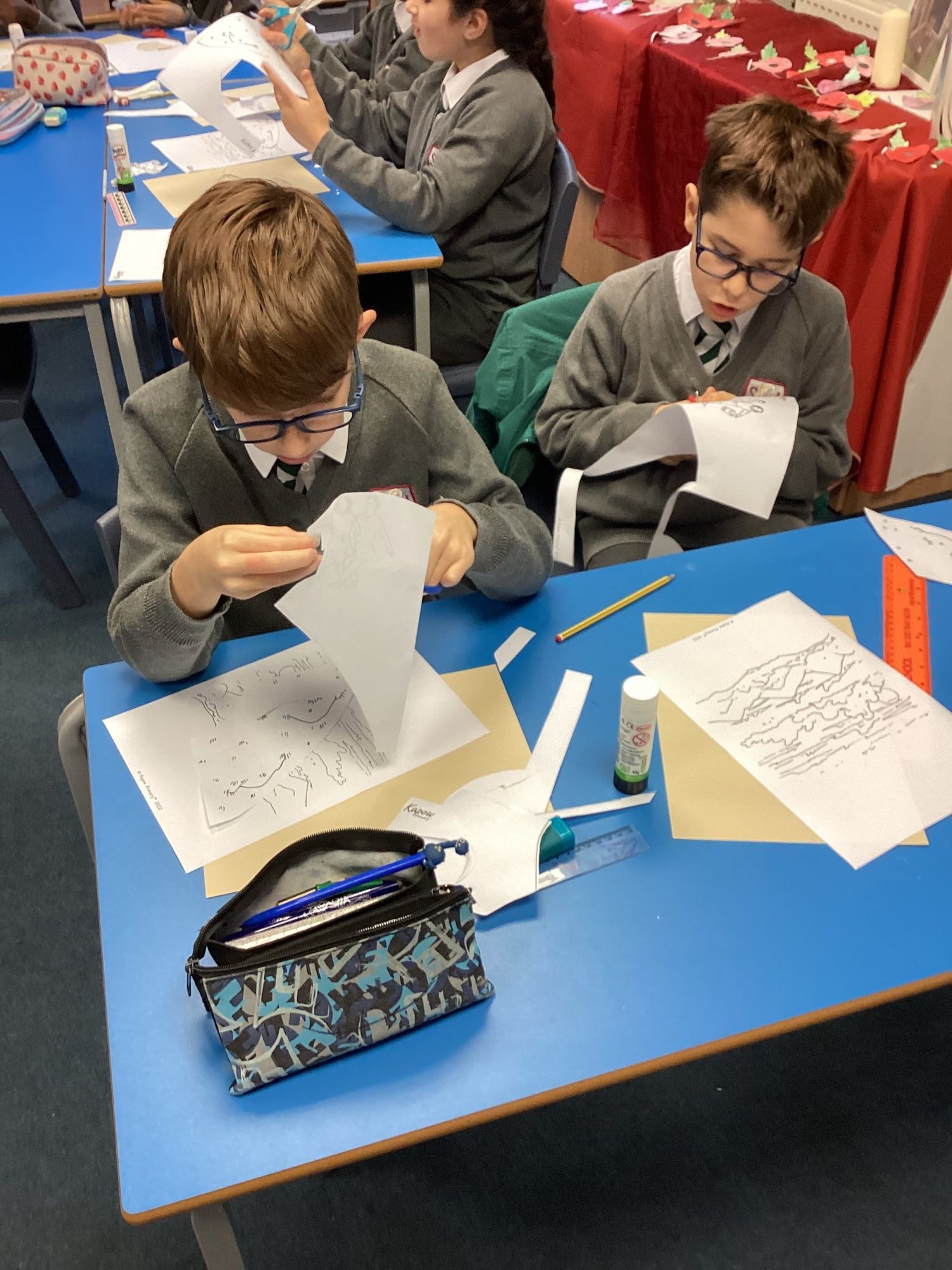
Computer Aims
Subject Content Upper Key Stage 2
By the beginning of Year 5, pupils should be able to read aloud a wider range of poetry and books written at an age-appropriate interest level with accuracy and at a reasonable speaking pace. They should be able to read most words effortlessly and to work out how to pronounce unfamiliar written words with increasing automaticity. If the pronunciation sounds unfamiliar, they should ask for help in determining both the meaning of the word and how to pronounce it correctly. They should be able to prepare readings, with appropriate intonation to show their understanding, and should be able to summarise and present a familiar story in their own words. They should be reading widely and frequently, outside as well as in school, for pleasure and information. They should be able to read silently, and then discuss what they have read.
Pupils should be able to write down their ideas quickly. Their grammar and punctuation should be broadly accurate. Pupils’ spelling of most words taught so far should be accurate and they should be able to spell words that they have not yet been taught by using what they have learnt about how spelling works in English.
During Years 5 and 6, teachers should continue to emphasise pupils’ enjoyment and understanding of language, especially vocabulary, to support their reading and writing. Pupils’ knowledge of language, gained from stories, plays, poetry, non-fiction and textbooks, will support their increasing fluency as readers, their facility as writers, and their comprehension. As in Years 3 and 4, pupils should be taught to enhance the effectiveness of their writing as well as their competence.
It is essential that pupils whose decoding skills are poor are taught through a rigorous and systematic phonics programme so that they catch up rapidly with their peers in terms of their decoding and spelling. However, as far as possible, these pupils should follow the Year 5 and 6 programme of study in terms of listening to books and other writing that they have not come across before, hearing and learning new vocabulary and grammatical structures, and having a chance to talk about all of these.
By the end of Year 6, pupils’ reading and writing should be sufficiently fluent and effortless for them to manage the general demands of the curriculum in Year 7, across subjects and not just in English, but there will continue to be a need for pupils to learn subject-specific vocabulary. They should be able to reflect their understanding of the audience for and purpose of their writing by selecting appropriate vocabulary and grammar. Teachers should prepare pupils for secondary education by ensuring that they can consciously control the structure of sentences in their writing and understand why sentences are constructed as they are. This involves consolidation, practice and discussion of language.
Specific requirements for pupils to discuss what they are learning and to develop their wider skills in spoken language form part of this programme of study. In Years 5 and 6, pupils’ confidence, enjoyment and mastery of language should be extended through public speaking, performance and debate.
Design and Technology Aims
The National Curriculum for design and technology aims to ensure that all pupils understand food and nutrition and have opportunities to learn to cook. In meeting this aim schools without access to a teaching kitchen, nearby kitchen or mobile kitchen may have to adapt what they teach accordingly to the facilities available.
It also aims to ensure that, working in fields such as materials (including textiles), horticulture, electricals and electronics, construction, and mechanics, they:
- develop valuable practical skills and use these safely with a range of resistant and non- resistant materials, drawing media, tools and equipment, in both 2-D and 3-D design and make well-crafted products that are fit for purpose
- develop and use a range of common practical skills, in contexts such as mechanical, diagnostic and repair tasks
- understand and, where appropriate, use the design cycle of planning, developing prototypes, modifying, making and evaluating
- know about good design, everyday products and use correct technical terminology
- investigate the rich history of design and technological innovation in Britain and further afield, from the Industrial Revolution onwards, as well as current innovations.
Subject Content Key Stage 2
Pupils should develop their skills and the safe use of tools and equipment by undertaking a range of practical tasks, such as making products, maintenance or cooking. They should increase their experience in different areas of design and technology, including through learning about local crafts or industries. They should understand how to use constructive feedback to improve what they design and make. Pupils should be taught about key historical developments in design and technology. Pupils should be taught about the major components of a balanced diet and how ingredients can be combined to prepare healthy meals. They should be taught basic cooking techniques and how to cook a variety of savoury dishes. In meeting these requirements, schools without access to a teaching kitchen, nearby kitchen or mobile kitchen may have to adapt the dishes and techniques they teach accordingly to the facilities available.
Through working in fields selected from those listed in the introduction materials (including textiles), horticulture, electricals and electronics, construction, and mechanics), pupils should be taught to:
- use safely and increasingly effectively a wider range of tools, equipment and materials with increasing skill to make products that are fit for purpose
- develop and use straightforward practical, maintenance and repair skills
- extend their skills to communicate their ideas visually in 2-D and 3-D, including through using information and communication technology
- use constructive comments from others to improve their work
- understand key events and turning points in design and technology, such as the Industrial Revolution, and how they have shaped the world we live in.
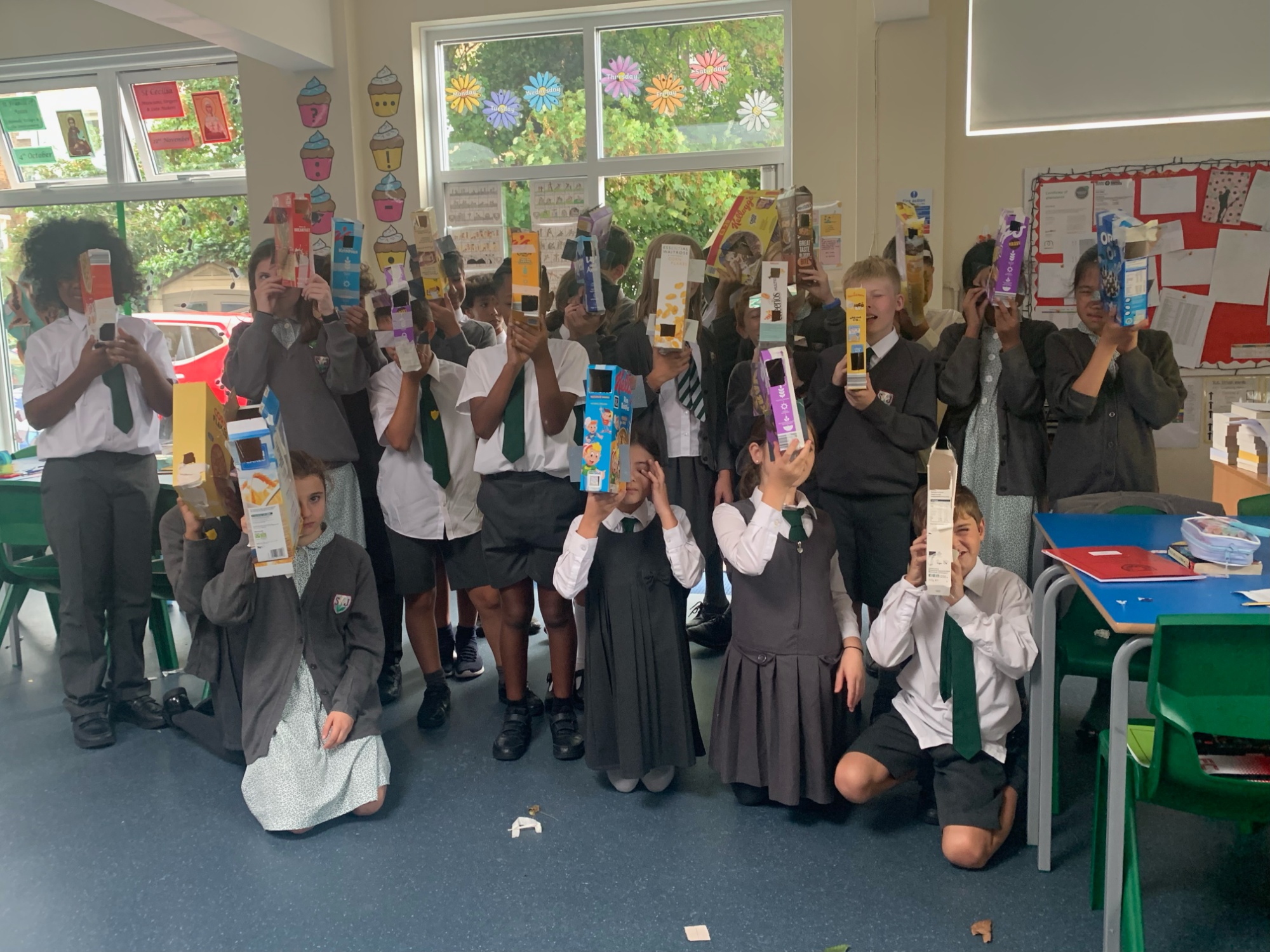
English Aims
By the beginning of Year 5, pupils should be able to read aloud a wider range of poetry and books written at an age-appropriate interest level with accuracy and at a reasonable speaking pace. They should be able to read most words effortlessly and to work out how to pronounce unfamiliar written words with increasing automaticity. If the pronunciation sounds unfamiliar, they should ask for help in determining both the meaning of the word and how to pronounce it correctly. They should be able to prepare readings, with appropriate intonation to show their understanding, and should be able to summarise and present a familiar story in their own words. They should be reading widely and frequently, outside as well as in school, for pleasure and information. They should be able to read silently, and then discuss what they have read.
Pupils should be able to write down their ideas quickly. Their grammar and punctuation should be broadly accurate. Pupils’ spelling of most words taught so far should be accurate and they should be able to spell words that they have not yet been taught by using what they have learnt about how spelling works in English.
During Years 5 and 6, teachers should continue to emphasise pupils’ enjoyment and understanding of language, especially vocabulary, to support their reading and writing. Pupils’ knowledge of language, gained from stories, plays, poetry, non-fiction and textbooks, will support their increasing fluency as readers, their facility as writers, and their comprehension. As in Years 3 and 4, pupils should be taught to enhance the effectiveness of their writing as well as their competence.
It is essential that pupils whose decoding skills are poor are taught through a rigorous and systematic phonics programme so that they catch up rapidly with their peers in terms of their decoding and spelling. However, as far as possible, these pupils should follow the Year 5 and 6 programme of study in terms of listening to books and other writing that they have not come across before, hearing and learning new vocabulary and grammatical structures, and having a chance to talk about all of these.
By the end of Year 6, pupils’ reading and writing should be sufficiently fluent and effortless for them to manage the general demands of the curriculum in Year 7, across subjects and not just in English, but there will continue to be a need for pupils to learn subject-specific vocabulary. They should be able to reflect their understanding of the audience for and purpose of their writing by selecting appropriate vocabulary and grammar. Teachers should prepare pupils for secondary education by ensuring that they can consciously control the structure of sentences in their writing and understand why sentences are constructed as they are. This involves consolidation, practice and discussion of language.
Specific requirements for pupils to discuss what they are learning and to develop their wider skills in spoken language form part of this programme of study. In Years 5 and 6, pupils’ confidence, enjoyment and mastery of language should be extended through public speaking, performance and debate.
Geography Aims
The National Curriculum for geography aims to ensure that all pupils:
- develop knowledge of the location of places of global significance, their defining physical and human characteristics and how they relate to one another; this place knowledge should provide a sound context for understanding geographical processes
- understand the processes that give rise to key physical and human geographical features of the world, how these are interdependent and how they bring about spatial variation and change over time
are competent in the geographical skills needed to:
- collect, analyse and communicate with a range of data gathered through experiences of fieldwork that deepen their understanding of geographical processes
- interpret a range of sources of geographical information, including maps, globes, aerial photographs and Geographical Information Systems (GIS)
- communicate geographical information in a variety of ways, including through maps and writing at length.
Subject Content Key Stage 2
Pupils should extend their knowledge and understanding beyond the local area and the United Kingdom to include Europe, North and South America. This will include the location and characteristics of a range of the world’s most significant human and physical features. They should develop their use of geographical tools and skills to enhance their locational and place knowledge.
Pupils should be taught to:
- locate the world’s countries, using maps to focus on Europe and North and South America and concentrating on their environmental regions, key physical and human characteristics, countries, and major cities
- name and locate counties and cities of the United Kingdom, geographical regions and their identifying human and physical characteristics, including hills, mountains, cities, rivers, key topographical features and land-use patterns; and understand how some of these aspects have changed over time
- identify the position and significance of latitude, longitude, Equator, Northern Hemisphere, Southern Hemisphere, the Tropics of Cancer and Capricorn, Arctic and Antarctic Circle, and time zones (including day and night)
- understand geographical similarities and differences through the study of human and physical geography of a region or area of the United Kingdom (different from that taught at Key Stage 1), a region or area in a European country, and a region or area within North or South America.
describe and understand key aspects of:
- physical geography, including: climate zones, biomes and vegetation belts,
- rivers, mountains, volcanoes and earthquakes, and the water cycle
- human geography, including: settlements, land use, economic activity including trade links, and the distribution of natural resources including energy, food, minerals, and water supplies
- use maps, atlases, globes and digital/computer mapping to locate countries and describe features studied
- use the eight points of a compass, four-figure grid references, symbols and key (including the use of Ordnance Survey maps) to build their knowledge of the United Kingdom and the wider world
- use fieldwork to observe, measure and record the human and physical features in the local area using a range of methods, including sketch maps, plans and graphs, and digital technologies.
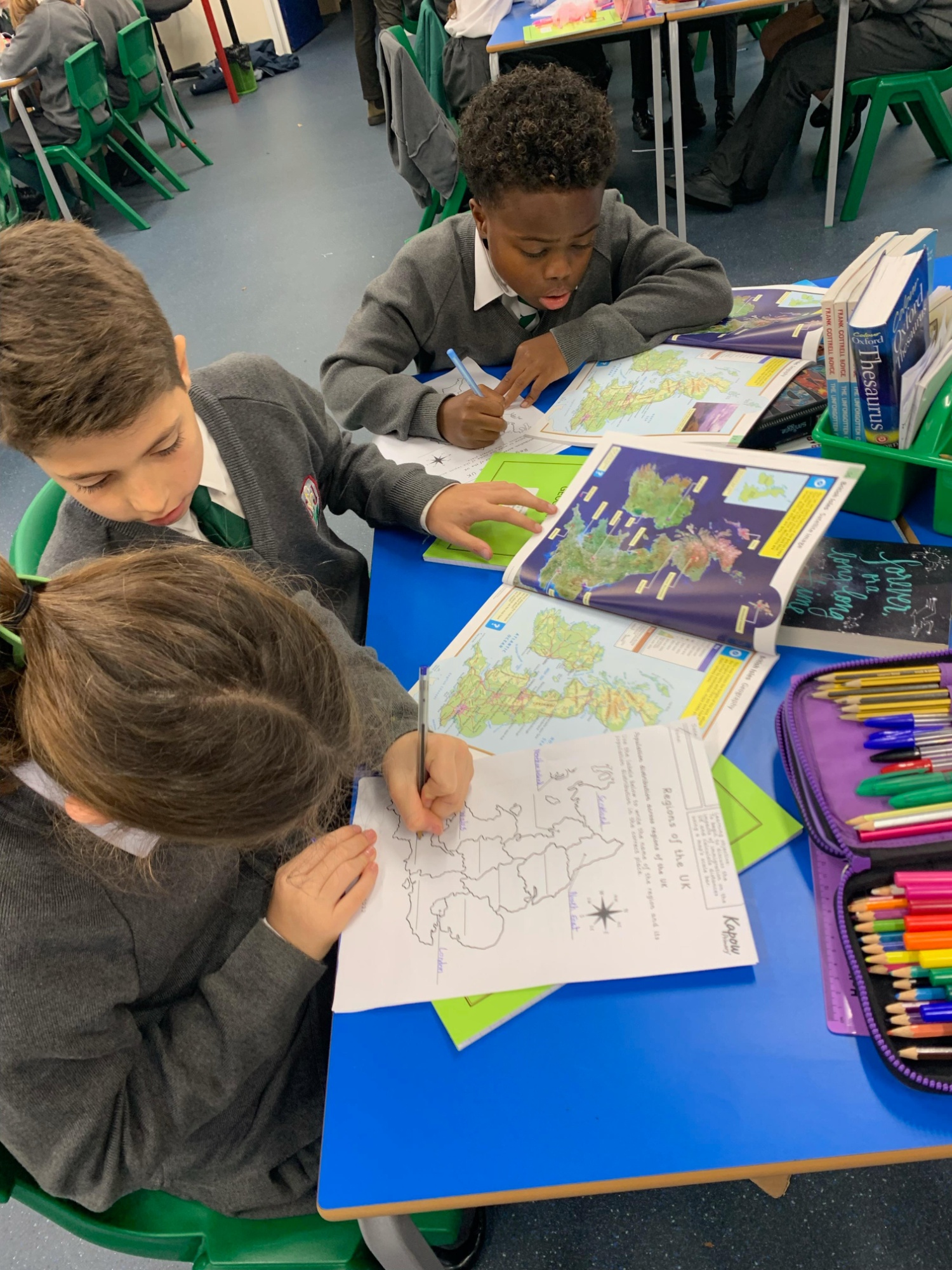
History Aims
The National Curriculum for history aims to ensure that all pupils:
- know and understand the story of these islands: how the British people shaped this nation and how Britain influenced the world
- know and understand British history as a coherent, chronological narrative, from the story of the first settlers in these islands to the development of the institutions which govern our lives today
- know and understand the broad outlines of European and world history: the growth and decline of ancient civilisations; the expansion and dissolution of empires; the achievements and follies of mankind
- gain and deploy a historically-grounded understanding of abstract terms such as ‘empire’, ‘civilisation’, ‘parliament’ and ‘peasantry’
- understand historical concepts such as continuity and change, cause and consequence, similarity, difference and significance, and use them to make connections, draw contrasts, analyse trends, frame historically-valid questions and create their own structured accounts, including written narratives and analyses
- understand how evidence is used rigorously to make historical claims, and discern how and why contrasting arguments and interpretations of the past have been constructed
- gain historical perspective by placing their growing knowledge into different contexts, understanding the connections between local, regional, national and international history; between cultural, economic, military, political, religious and social history; and between short- and long-term timescales.
Subject Content Key Stage 2
Pupils should be taught about the ancient civilisations of Greece and Rome. In addition, across Key Stages 2 and 3, pupils should be taught the essential chronology of Britain’s history. This will serve as an essential frame of reference for more in-depth study. Pupils should be made aware that history takes many forms, including cultural, economic, military, political, religious and social history. Pupils should be taught about key dates, events and significant individuals. They should also be given the opportunity to study local history.
Pupils should be taught the following chronology of British history sequentially:
early Britons and settlers, including:
- the Stone, Bronze and Iron Ages
- Celtic culture and patterns of settlement
Roman conquest and rule, including:
- Caesar, Augustus, and Claudius
- Britain as part of the Roman Empire
- the decline and fall of the Western Roman Empire
Anglo-Saxon and Viking settlement, including:
- the Heptarchy
- the spread of Christianity
- key developments in the reigns of Alfred, Athelstan, Cnut and Edward the o Confessor
the Norman Conquest and Norman rule, including:
- the Domesday Book
- feudalism
- Norman culture
- the Crusades
Plantagenet rule in the 12th and 13th centuries, including:
- key developments in the reign of Henry II, including the murder of Thomas Becket
- Magna Carta
- de Montfort's Parliament
relations between England, Wales, Scotland and France, including:
- William Wallace
- Robert the Bruce
- Llywelyn and Dafydd ap Gruffydd
- the Hundred Years War
life in 14th-century England, including:
- chivalry
- the Black Death
- the Peasants’ Revolt
the later Middle Ages and the early modern period, including:
- Chaucer and the revival of learning
- Wycliffe’s Bible
- Caxton and the introduction of the printing press the Wars of the o Roses
- Warwick the Kingmaker
- the Tudor period, including religious strife and Reformation in the reigns of Henry VIII, Edward VI, and Mary
Elizabeth I's reign and English expansion, including:
- colonisation of the New World o plantation of Ireland
- conflict with Spain
- the Renaissance in England, including the lives and works of individuals such as Shakespeare and Marlowe
the Stuart period, including:
- the Union of the Crowns
- King versus Parliament
- Cromwell's commonwealth, the Levellers and the Diggers the restoration of the
- monarchy
- the Great Plague and the Great Fire of London
- Samuel Pepys and the establishment of the Royal Navy
- the Glorious Revolution, constitutional monarchy and the Union of the Parliaments.
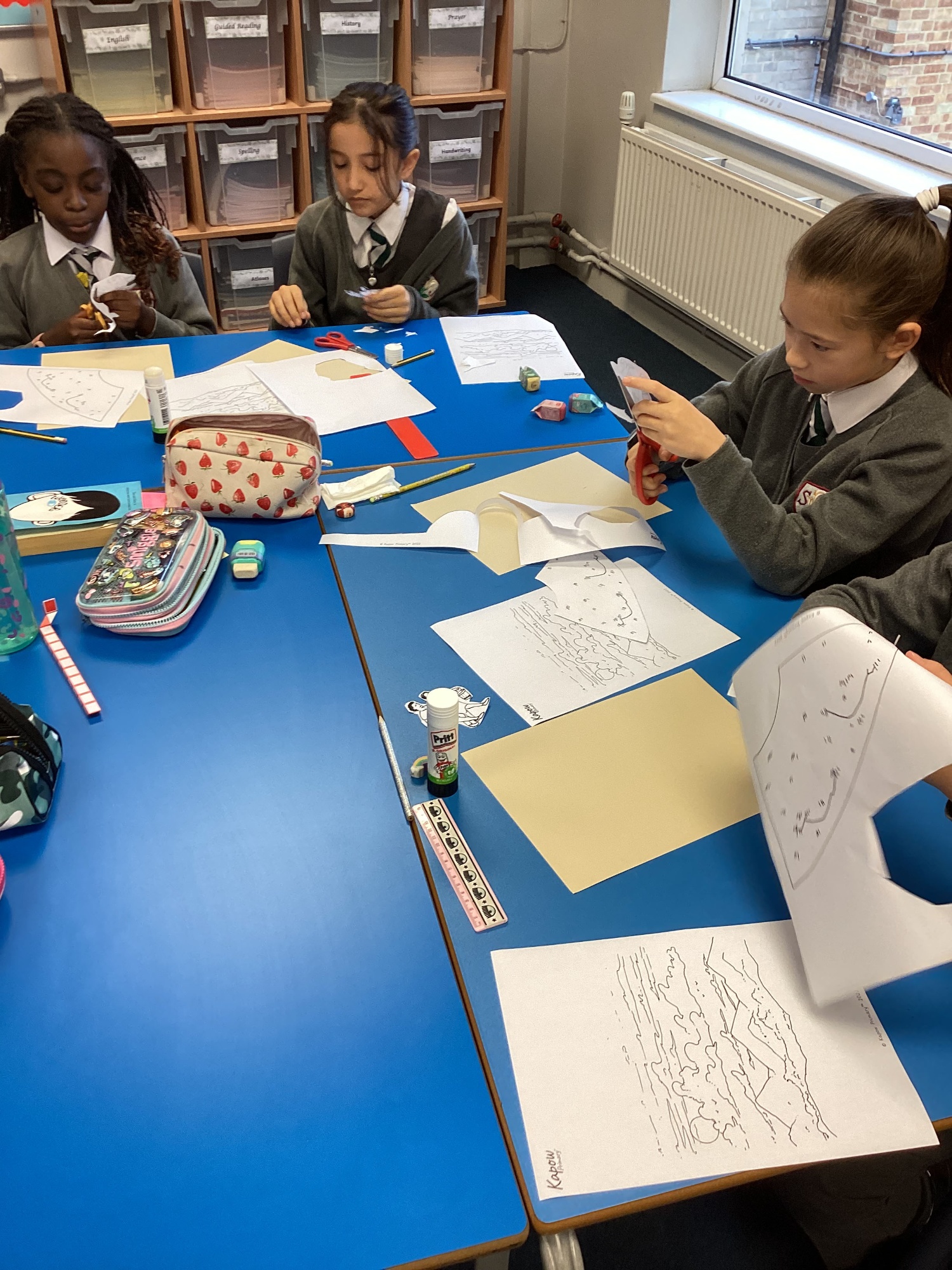
Mathematics Aims
The principal focus of mathematics teaching in upper Key Stage 2 is to ensure that pupils extend their understanding of the number system and place value to include larger integers. This should develop the connections that pupils make between multiplication and division with fractions, decimals, percentages and ratio.
At this stage, pupils should develop their ability to solve a wider range of problems, including increasingly complex properties of numbers and arithmetic, and problems demanding efficient written and mental methods of calculation. With this foundation in arithmetic, pupils are introduced to the language of algebra as a means for solving a variety of problems. Teaching in geometry and measures should consolidate and extend knowledge developed in number. Teaching should also ensure that pupils classify shapes with increasingly complex geometric properties and that they learn the vocabulary they need to describe them.
By the end of Year 6, pupils should be fluent in written methods for all four operations, including long multiplication and division, and in working with fractions, decimals and percentages.
Pupils should read, spell and pronounce mathematical vocabulary correctly.
Language Aims
The National Curriculum for languages aims to ensure that all pupils:
- understand and respond to spoken and written language from a variety of authentic sources
- speak with increasing confidence, fluency and spontaneity, finding ways of communicating what they want to say, including through discussion and asking questions, and continually improving the accuracy of their pronunciation and intonation
- can write at varying length, for different purposes and audiences, using the variety of grammatical structures that they have learnt
- discover and develop an appreciation of a range of writing in the language studied.
Subject Content Key Stage 2: Foreign languages
Teaching should focus on enabling pupils to make substantial progress in one of the following languages: French, German, Italian, Mandarin, Spanish, Latin or Ancient Greek. The teaching should provide an appropriate balance of spoken and written language and should lay the foundations for further foreign language teaching at Key Stage 3. It should enable pupils to understand and communicate ideas, facts and feelings in speech and writing, focused on familiar and routine matters, using their knowledge of phonology, grammatical structures and vocabulary. The focus of study in modern languages will be on practical communication, while the focus in Latin or Ancient Greek will be to provide a linguistic foundation for learning modern languages and for reading comprehension. Pupils studying ancient languages may take part in simple oral exchanges, while discussion of what they read will be conducted in English.
Pupils should be taught to:
- listen attentively to spoken language and show understanding by joining in and responding
- explore the patterns and sounds of language through songs and rhymes and link the spelling, sound and meaning of words
- engage in conversations; ask and answer questions; express opinions and respond to those of others; seek clarification and help
- speak in sentences, using familiar vocabulary, phrases and basic language structures
- develop accurate pronunciation and intonation so that others understand when they are reading aloud or using familiar words and phrases
- present ideas and information orally to a range of audiences
- read carefully and show understanding of words, phrases and simple writing
- appreciate stories, songs, poems and rhymes in the language
- broaden their vocabulary and develop their ability to understand new words that are introduced into familiar written material, including through using a dictionary
- write phrases from memory, and adapt these to create new sentences, to express ideas clearly
- describe people, places, things and actions orally and in writing
- understand basic grammar appropriate to the language being studied, such as (where relevant): feminine, masculine and neuter forms and the conjugation of high-frequency verbs; key features and patterns of the language; how to apply these, for instance, to build sentences; and how these differ from or are similar to English.
Music Aims
The National Curriculum for music aims to ensure that all pupils:
- perform, listen to, review and evaluate music across a range of historical periods, genres, styles and traditions, including the works of great musicians and composers
- learn to sing and to use their voices, to compose and make music with others, have the opportunity to learn a musical instrument, and have the opportunity to progress to the next level of musical excellence
- understand musical notations and how music is constructed, produced and communicated through its inter-related dimensions: pitch, duration, dynamics, tempo, timbre, texture and structure.
Subject Content Key Stage 2
Pupils should be taught to sing and play musically with increasing confidence and control. They should develop an understanding of musical composition, organising and manipulating ideas within musical structures and reproducing sounds as part of an aural memory.
Pupils should be taught to:
- play and perform in solo and ensemble contexts, using their voice and playing musical instruments with increasing accuracy, control and expression
- improvise and compose music using the inter-related dimensions of music separately and in combination
- listen with attention to detail and recall sounds with increasing aural memory
- use and understand the basics of staff and other musical notations
- appreciate and understand a wide range of high-quality live and recorded music from
- different traditions and from great musicians and composers
- develop an understanding of the history of music.
Physical Education Aims
The National Curriculum for physical education aims to ensure that all pupils:
- develop competence to excel in a broad range of physical activities
- are physically active for sustained periods of time
- engage in competitive sports and activities
- lead healthy, active lives.
Subject Content Key Stage 2
Pupils should continue to implement and develop a broader range of skills, learning how to use them in different ways and to link them to make actions and sequences of movement. They should enjoy communicating, collaborating and competing with each other. They should develop an understanding of how to succeed in different activities and sports and learn how to evaluate and recognise their own success.
Pupils should be taught to:
- use running, jumping, catching and throwing in isolation and in combination
- play competitive games, modified where appropriate, such as football, netball, rounders, cricket, hockey, basketball, badminton and tennis, and apply basic principles suitable for attacking and defending
- develop flexibility, strength, technique, control and balance, for example through gymnastics and athletics
- perform dances using a range of movement patterns
- take part in outdoor and adventurous activity challenges both individually and within a team
- compare their performances with previous ones to achieve their personal best.
Science Aims
Subject Content Upper Key Stage 2
The principal focus of science teaching in upper Key Stage 2 is to enable pupils to develop a deeper understanding of a wide range of scientific ideas. They should do this through exploring and talking about their ideas; asking their own questions about scientific phenomena; and analysing functions, relationships and interactions more systematically. At upper Key Stage 2, they should encounter more abstract ideas and begin to recognise how these ideas help them to understand and predict how the world operates. They should also begin to recognise that scientific ideas change and develop over time. They should select the most appropriate ways to answer science questions using different types of scientific enquiry, including observing changes over different periods of time, noticing patterns, grouping and classifying things, carrying out fair tests and finding things out using a wide range of secondary sources of information. Pupils should draw conclusions based on their data and observations, use evidence to justify their ideas, and use their scientific knowledge and understanding to explain their findings.
‘Working and thinking scientifically’ is described separately at the beginning of the programme of
study, but must always be taught through and clearly related to substantive science content in the programme of study. Throughout the notes and guidance, examples show how scientific methods and skills might be linked to specific elements of the content.
Pupils should read, spell and pronounce scientific vocabulary correctly.
Close
Social Wall